
Layering Your Living Room Lighting
The Living Room, also referred to as the heart of the home, is where you want to relax, spend time with family and friends, and put your feet up at the end of a long day of work. You want it to be inviting, comfortable, restful, and calming.
You choose furniture, decor and materials that give you that sense of calm and comfort, now for the lighting to complement those choices.
Here are a few reasons why good lighting is important:
Ambience: The lighting in your living room sets the mood and creates a comfortable atmosphere. For example, warmer or dimmable lights can create a cosy look and feel, while brighter lights can make the space crisper and more modern with a more energetic feel.
Functionality: Good lighting can make your living room feel more functional. It makes for a better experience when reading, watching TV, or doing other activities. This is where good planning comes in. When designers talk about layering lighting, this is what they mean. You want your living area to cater to everyone in the household, sometimes you will need it well-lit, and other times you will want it soft and cosy. Planning your lighting to meet your needs is important. Think Ambient (main lighting), Accent (decorator lighting) and Task Lighting (functional).
Aesthetics: The right lighting can affect the aesthetic appeal of your living room by highlighting certain features within the space. Pendants as corner features or wall scones to provide accent lighting can add a level of warmth and romance to a room.
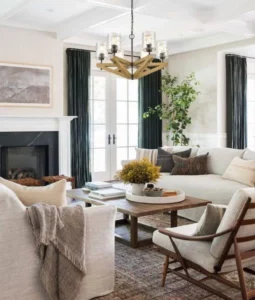
Factors to consider when choosing living room lighting
Choosing the right lighting for your living room can often be a daunting task. Here are some factors to consider before making your selection:
Room size: The size of your living room will determine how much light your space will need.
Purpose: Consider how you will use the living room and choose lighting that fits your needs.
Style: The lighting in your living room should complement the overall style and decor of your home. If your living area, dining and kitchen are part of an open-plan design, they should complement one another.
Energy Efficiency: Look for lighting fixtures that are energy-efficient to reduce your electricity bill and your carbon footprint.
Types of living room lighting
Ambient lighting provides a base lighting level and sets the room’s overall tone. Areas where you are required to perform specific activities, such as reading or working on a project, will require task lighting. Additionally, accent lighting can be utilised to highlight living room features, such as artwork or sculptures.
Considering the different lighting options available, you’ll soon be able to determine what you need.

Layering Your Living Room Lighting
Layering is a design technique that uses multiple lighting sources to create a well-lit, functional, comfortable, and aesthetically pleasing space. Layering your living room lighting is essential to achieving the desired atmosphere and mood in your home.
Layering your living room lighting is important for several reasons. It creates a more cohesive living space by combining and utilising different types of lighting. In doing so, you can make an area suitable for all types of activities.
The first step in layering your living room lighting is to start with ambient lighting. This should be your primary light source, achieved through ceiling lights, chandeliers, or recessed lighting. The goal is to create an even level of illumination throughout the room.
Next, you should use task lighting to provide additional light for specific activities. Additionally, accent lighting should be used to highlight specific features of your living room to add more character to the space. To tie everything together, dimmers can be utilised to control the intensity of your lighting to best suit your needs.
Light Fixtures
Choosing the right type, size, and style of light fixture can make all the difference in the overall appearance and feel of your living room. Here are the different types of fixtures you can utilise for your space:
Chandeliers come in various styles, from traditional to modern, and are ideal for larger style living rooms.
Pendant lights are smaller but typically used in groups or clusters. These can add style and sophistication to your living room, especially when you want to draw attention to particular focal points. In living rooms, pendants are best hung over coffee tables, lamp tables or in the corner of the room.
Downlights – The most popular choice for Ambient Lighting, ensure you look at the specifications to ensure the downlights you select, suit your requirements. Consider using low glare, recessed, high CRI, good lumens, dimmable lights, etc.
Surface Mounted Lights are directly installed onto the ceiling, providing adequate lighting for low-ceilinged living rooms.
Wall sconces are installed on the wall, which can create a warm and cosy vibe in your living room space.
Track Lighting – Track lighting is also a great choice for living rooms as it provides the flexibility to light the space while highlighting features.
Light Bulbs
Choosing the right type of light bulb is just as important as selecting the correct light fixture. There are various light bulbs available, each with its own advantages and disadvantages.
Incandescent bulbs are the most traditional type of light bulb, which produce a warm, yellowish light.
Halogen bulbs are a type of incandescent bulb that uses halogen gas. They are more expensive than traditional incandescent bulbs but are more energy efficient.
Compact fluorescent bulbs (CFLs) produce a cool, bluish-white light ideal for task lighting but can be harsh depending on the setting it’s used in.
Light Emitting Diode (LED) bulbs are the most energy efficient and longest-lasting, producing a white light that is both durable and efficient in the long term.
Smart lights can be controlled through smartphone apps and can be turned on or off remotely.